Pagani Huayra
Every bolt on it is titanium, with the maker's logo on the head. It also does 383.
All the carsA 6.0L AMG V12 making 730 HP, 1350 KG on the scale, a top speed of 383 KMH, and only 100 ever made.
Why this one
Pagani is a small company outside Modena, started by Horacio Pagani, an Argentinian who taught himself to work with carbon fibre and went to Italy to build cars. Before his own company he worked at Lamborghini, pushing for carbon fibre at a time when most of the industry still thought of it as something for aircraft and race cars. He talks about Leonardo da Vinci a lot, about art and science being the same job. With most car makers that would be a line in a brochure. With Pagani you only have to look at the car to see he means it.
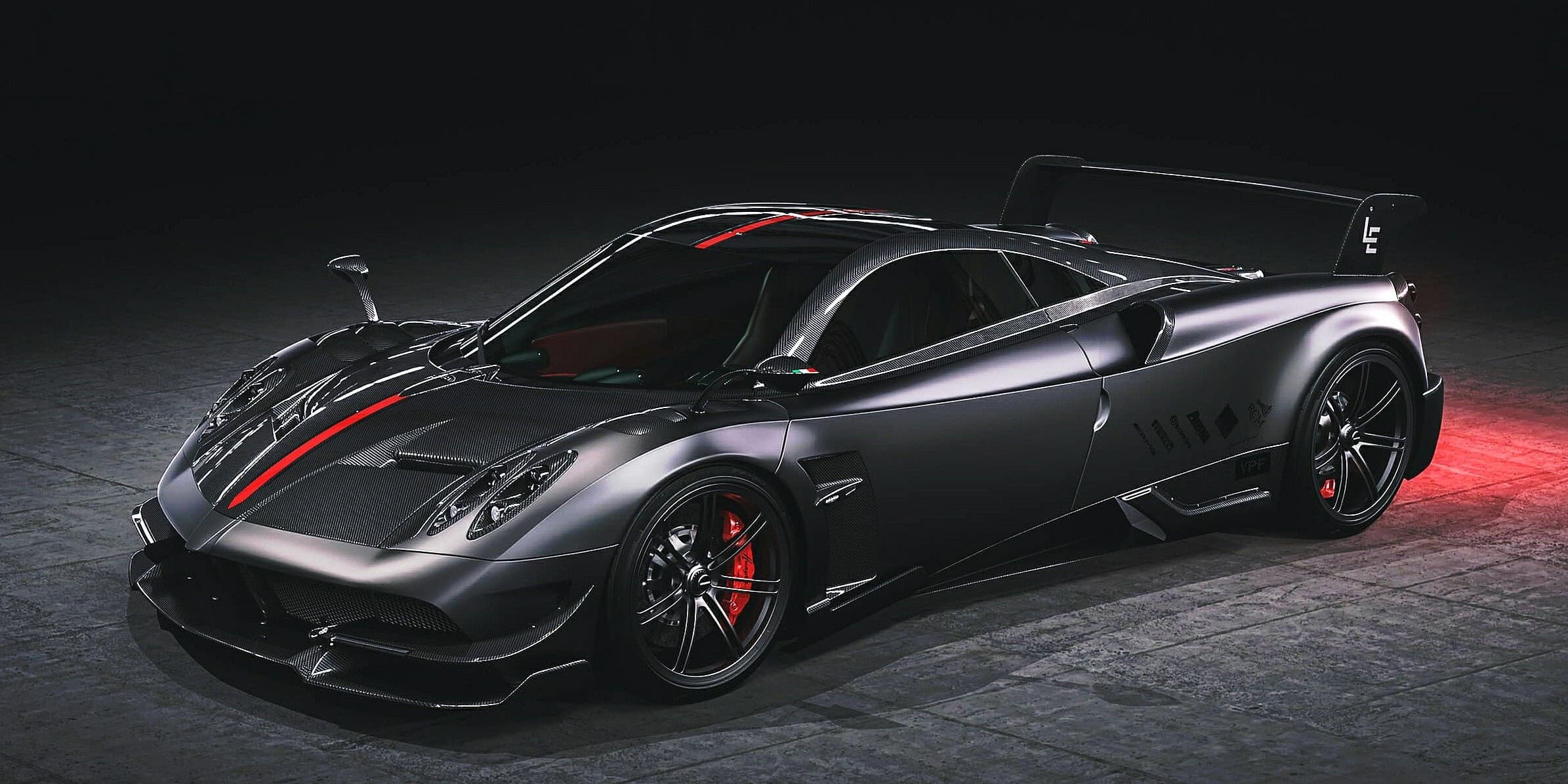
The Huayra is named after Huayra Tata, a god of wind from the Andes, and the wind is part of how it works. There are four flaps, two at the front and two at the back, and a computer moves each one on its own, all the time. Brake hard and they all stand up to slow the car down. Turn in and the inside ones rise to press that side into the road. There's no big fixed wing on the back. The flaps do that job, and they keep changing their minds. On video it looks like the car is breathing.
The engine is a six litre twin turbo V12 that AMG built for Pagani alone. The sound people remember is the turbos: a whistle and a rush of air as they spool up and let go, like something very large breathing in right behind your head.
Under the body is a chassis made of what Pagani calls carbotanium, carbon fibre woven together with titanium thread. It's lighter than steel, and the titanium stops it from shattering the way plain carbon can in a crash. It's a very Pagani solution: invent a material, then give it a name.
Then there's the inside, which is where Pagani stops making sense as a business and starts making sense as a craftsman. The gear linkage is left out in the open because it's beautiful to look at. Switches are machined out of solid aluminium. The bolts are titanium, and every one of them carries the Pagani logo. Nobody will ever see most of them. They were done properly anyway.
That's the reason it's here. When I say Pagani for the art, this is the car I mean. It's proof that something can be fast and precise and still be made with the kind of care you'd expect from a watchmaker. Very few things are built like that anymore, and even fewer of them do 383.