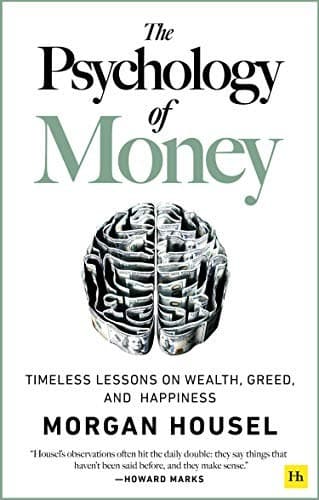
The Psychology of Money
Morgan Housel
read
Money is mostly about behaviour, not maths. The stories are the lesson.
Morgan Housel's point is that doing well with money has less to do with how smart you are and more to do with how you behave. A genius who panics and sells at the bottom does worse than an ordinary person who leaves their savings alone for thirty years. The book is twenty short chapters, each one built around a story, and most of them make the same point from a new angle.
The chapter on compounding is the one people remember. Most of Warren Buffett's fortune arrived after he turned sixty five. He's a great investor, but the real trick is that he started as a child and never stopped, so time did most of the work. Housel also writes about luck and risk, using two schoolfriends with the same rare access to a computer in the sixties. One became Bill Gates. The other died in a mountaineering accident before finishing school.
The chapter I liked most is the man in the car paradox. When you see someone in an expensive car, you don't think about how impressive the driver is. You picture yourself in it. The owner bought the car hoping for admiration, and nobody gave him any. That's an awkward thing to read when you have a whole page of this site dedicated to cars you love.
The idea I kept is that the most useful thing money buys is control over your own time. Being able to spend a night building something because you want to, and not because someone's paying for the hours, is worth more to me than anything on the Midnight page.